
Every crypto founder eventually faces the same question: where should the company live? The tempting shortcut is to search for the cheapest or friendliest country and move on. It rarely works. A jurisdiction that suits a token-research studio can be unworkable for a custody firm, and a low application fee means little if the bank will not open an account afterwards.
This guide is about how to decide. It gives you a worksheet, a sequence of elimination steps and a handful of examples. It does not rank countries, because any ranking would be out of date by the time you finish reading it.
Start with what you actually do
Regulation attaches to activities, not to the word “crypto.” Before you compare any country, write down each service you plan to offer in a single sentence: holding client assets, matching orders, moving money between wallets and bank accounts, issuing a token, or selling software that never touches customer funds.
Each of these can fall under a different rulebook, and some may fall under none at all. A software vendor that never controls client assets often faces a lighter burden than a platform that does. Be honest about the edge cases, such as staking features, referral rewards or a stablecoin you plan to add later. Regulators look at what the business does in practice.
Map your customers, not just your office
The second input is who you will serve. Many regimes apply when you market to or onboard residents of their territory, wherever your servers or directors sit. A company incorporated in one country but targeting customers in three others may need to satisfy all of them, or deliberately block some.
List your target markets, split them into retail and institutional, and mark any you intend to exclude. Excluding a market is a legitimate decision, but it must be enforced with real controls, such as geoblocking and onboarding checks, rather than a line in the terms of service.
The comparison worksheet
Build one column per candidate jurisdiction and one row per factor below. Score each from 1 to 5, or write “unknown, ask counsel” when you cannot answer yet. An honest “unknown” is more useful than a guessed score.
| Factor | What to find out |
|---|---|
| Business activities | Is each activity regulated, exempt or unclear? Which licence type applies? |
| Target customers | Can you lawfully serve your chosen customer groups from here? |
| Local presence | Are local directors, premises, staff or a resident compliance officer required? |
| Banking | Is a realistic banking relationship available for your model? |
| Staffing | Can you hire the senior roles you need, locally or remotely? |
| Setup costs | Which one-off costs apply, including advisers, capital and technology? |
| Ongoing obligations | What are the reporting, audit, capital and renewal duties each year? |
Do not average the scores blindly. A 1 on “activities” is a veto, not a weakness to be offset by cheap staffing.
A four-step elimination process
- Remove jurisdictions that cannot license or accommodate your core activity. If the regime has no pathway for what you do, nothing else matters.
- Remove those whose local presence rules you cannot meet. A requirement for resident directors and a physical office changes your cost base and hiring plan.
- Test banking early. Talk to banks or payment providers before you commit. A licence you cannot bank is a launch delay, not a launch.
- Compare the survivors on running cost and workload. By this stage you may have two or three candidates. Look at annual obligations, not just the fee to get started.
Two short illustrations
Consider a custody start-up that wants institutional clients across Europe. A single authorisation in one EU member state may be usable across the bloc under the MiCA framework, which makes an EU base attractive, provided the firm can meet that state’s substance and staffing expectations.
Now consider a payments company serving only US businesses. There is no single US crypto licence. The company may face federal registration plus state-by-state licensing, so the “jurisdiction” decision becomes a question of which states to enter first and in what order. The same worksheet works for both, but the answers differ sharply.
Common mistakes
- Choosing on price alone and discovering the real cost in capital requirements, staff and audits later.
- Assuming incorporation equals permission to operate.
- Leaving banking until after the licence is granted.
- Ignoring where customers live.
- Relying on a single adviser’s view without a second opinion.
Where to go next
Next step is to look at who is already operating in your target market: browse the compliance and security providers and custody companies in the directory to see where peers are based and which advisers they use. For country-specific detail, see our country licensing guides.
None of this replaces qualified legal advice. Use the worksheet to arrive at a well-prepared shortlist, then pay a lawyer in each candidate jurisdiction to challenge your assumptions before you spend on incorporation.
Full Data File: 7 Things You Should Know When Creating Your Own NFT in Crypto Intelligence
Presales and promos success, social media presence, location...We are also on medium.com/cryptolounge - follow us!

BIO:
I am a copywriter for TDOU. You’ll mostly see me covering topics that are not related to blockchain.
·Data File Of 7 Things You Should Know When Creating Your Own NFT
Crypto Intelligence
Presales and promos success, social media presence, locations, related companies...
See The Data FileMore & Better:
Email alerts (2-3 a week)
- Opinions, Analyses & Interviews
- Industry News Releases
- Blockchain Tech Intelligence
Data is beautiful

Blockchain Technology in Mobile App Market: State of the Industry 2020
Blockchain is currently at the top among the new trending technologies that came up in recent years. It is a remarkable innovation for our ever more digitalised world. Blockchain is mostly known as decentralized network,...

New Horizons in Fintech: Payments, Big Data and Partnerships [Infographic]
The global fintech market saw a period of consolidation in 2018, which is exactly what we saw also in terms of price evaluation of crypto assets. In spite of the “crypto winter”, which is apparently...

Brand development in forex and crypto: Most expensive domain names [Infographic]
Crypto infographics - Most expensive domain names in forex and crypto. Targeted brand development in forex and crypto with domain names.

Top 8 Women in Blockchain Tech [Infographic]
When it comes to women in crypto, the pre-2016 OG heads will probably come up with names like Alena Vranova and Blythe Masters. Alena Vranova is the former CEO of Satoshi Labs, the company that...
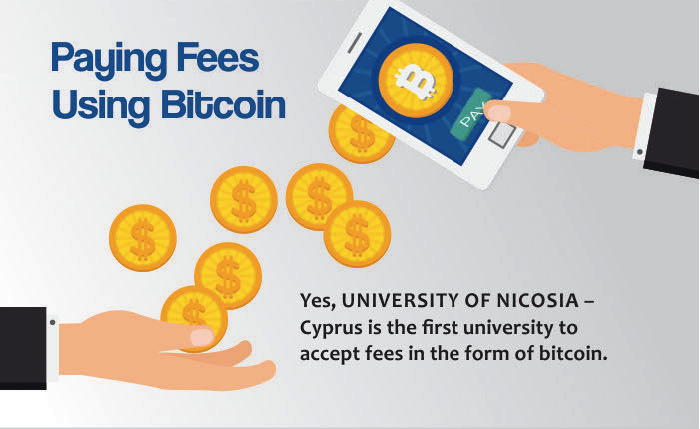
Infographic: Blockchain Technology, Ledgers, Blocks and the Role of Price
Blockchain technology 101: What is blockchain, what types of blockchains exist and what role does the cryptocurrency price play.

Infographic: The Good And The Bad Of ICOs
Infographic: The good and bad of ICOs - Which token sales raised the most money in 2018?

The Business of Esports: All The Numbers [Infographic]
Esports is a rapidly emerging category as a real sport. It’s even beginning to compete with traditional sports.

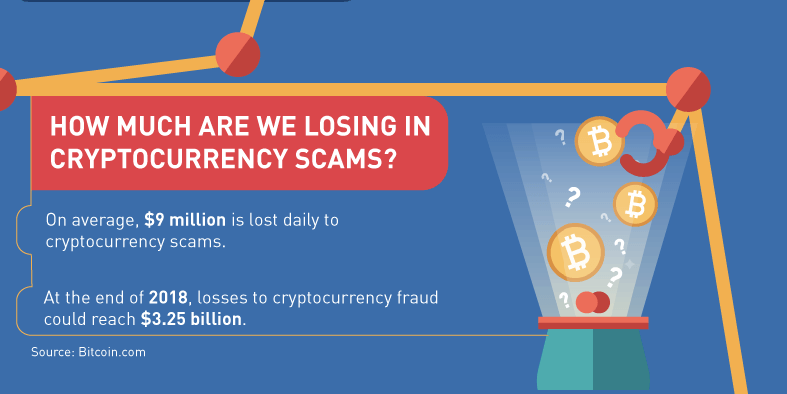
Shocking Facts About Cryptocurrency Heists [Infographic]
If there is one question in the history of Bitcoin that cannot be answered with anything more than an estimate, it is the problem of how much of Bitcoin’s supply is actually ever available on...

Comparing Forex Market with Crypto Markets [Infographic]
One of the few metrics that cryptocurrency markets have in common with the forex markets in 2018 is the high percentage of total trades being located on few most popular markets.

East vs. West: Which One Sides More With Blockchain?
Digital cash schemes were the holy grail of the late 90s, but since the bitcoin blockchain was invented, suddenly nobody in the West cares.

Blockchain Consortium in Trade Finance: 6 Notable Networks [Infographic]
The success of trade finance blockchain implementations depends on how widely they are adopted. That's why we have seen businesses form consortia based on similar interests.

Real-world companies that accept crypto payments [Infographic]
Infographic - Graphic map of businesses that let customers pay in bitcoin.
Infographic: Blockchain Hacks & Crypto Trading Platform heists 2018 vs 2017
Blockchain infographic comparing the biggest crypto heists of 2018 and 2017. In 2017 the focus lied more on ICOs, smart contracts and wallet.

15 crypto kings that are making history with their engagement in the field of cryptocurrencies
Coining The Bucks With Cryptocurrencies Have you ever wondered how much masters of the cryptocurrencies are worth? Like the guy who founded Ethereum, or the one who started Ripple, for example. The answer, in short,...

Industry News Releases

LocalCryptos, the non-custodial p2p platform, added a crypto-to-crypto exchange feature
LocalCryptos, formerly known as LocalEthereum, is currently the most popular non-custodial p2p market for cryptocurrencies....
Read >>- Montenegro to embrace blockchain technology in efforts to join the EU
- The Global Hackaton (April, Los Angeles) comes with free tickets to Crypto Invest Summit
- Etheremon celebrating #ChineseNewYear2019 with a series of bounties (Ends 8:00 AM UTC on Feb 11th)
- Crypto Marble dApp Game: Monopoly on Blockchain
- The dApp gaming platform VX Network launched the official VX Wallet in Apple App Store and Google Play
- Etheremon's first Chinese New Year Campaign: Chance to recall two rare mons
Editor: Diana
Editor for all TDOU’s publications.
Comments
Also by Lucia Woller

Choosing a Jurisdiction for Your Crypto Business in 2027
Released on November 05, 2026 08:08:11 PM by Lucia Woller Read >>

